
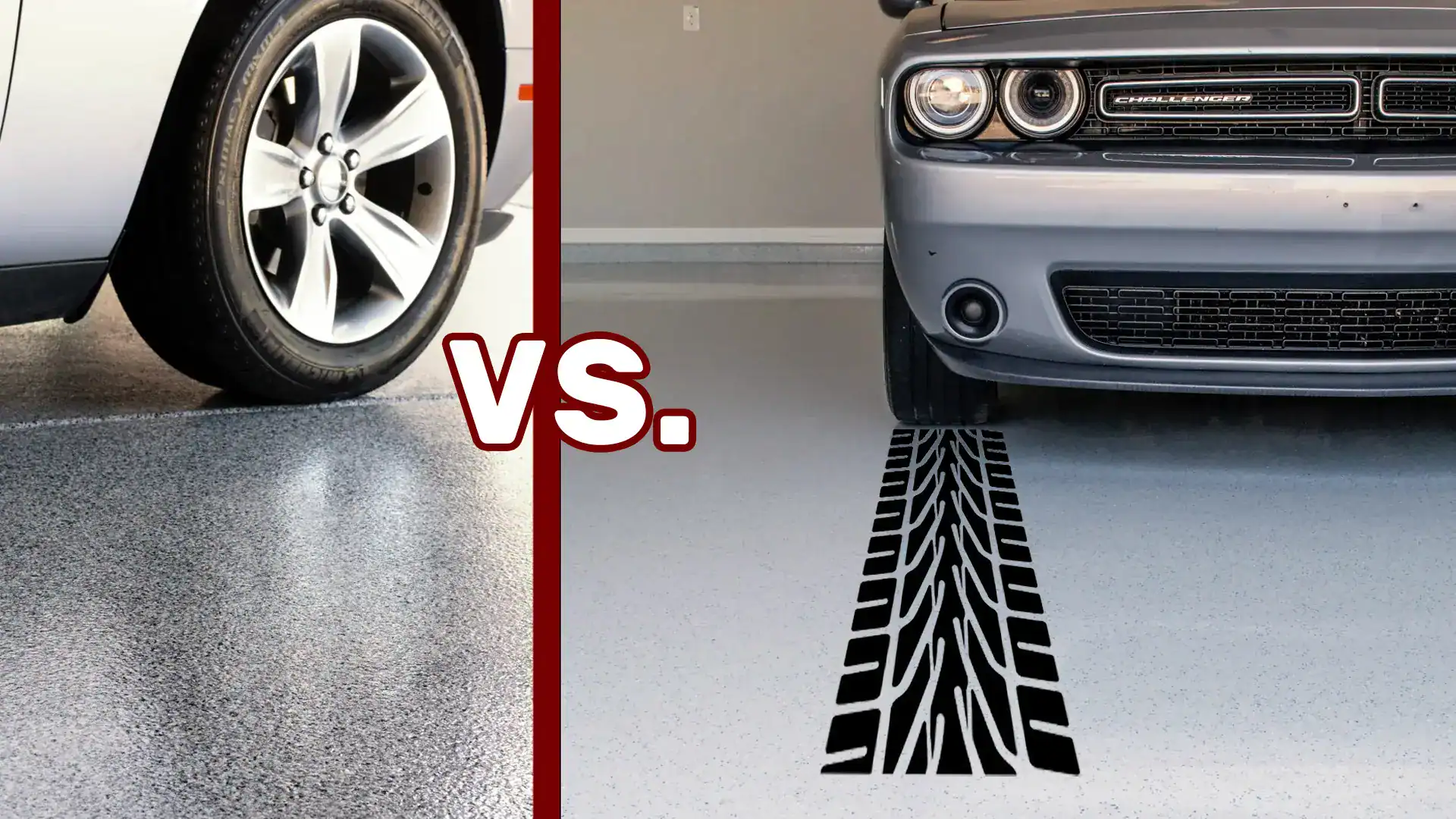
Hot tire transfer is one of the most common reasons garage floors lose their clean, finished look. But a professionally installed polyaspartic floor coating is built to prevent that damage from the start.
Why Hot Tire Transfer Happens in the First Place
Many “1-day” garage floor coatings rely entirely on thin, quick-curing polyurea or polyaspartic coatings, top to bottom: one direct-to-concrete primer coat (a bad idea given that polyurea-polyaspartics make for lousy moisture vapor barriers) and one thin, clear polyaspartic top coat. “1-day” installs may look great at first, but they are vulnerable to moisture vapor transmission and staining due to hot-tire transfer.
We’ve discussed at length in prior blogs about using a polyurea-polyaspartic as the base coat. Hint: It’s a poor choice as these coatings go down thinly and cure so quickly that they fail to deeply penetrate the concrete slab…especially in the presence of moisture. Hence, the thin, poorly-penetrating primer coat bubbles or peels when exposed to high hydrostatic pressures from below. But why are “1-day” coatings also susceptible to hot tire transfer?
Car tires contain plasticizers, typically phthalates or similar softening agents, that keep rubber flexible. As tires heat up during driving, these plasticizers can migrate to the surface of the tire. When you park in your garage, the plasticizers can transfer from the tire into the coating below. Over time, this leads to discoloration, a sticky surface, or even coating breakdown.
What prevents this from happening? Quality, 100%-solids polyaspartics with high cross-linking properties. The problem is that the polyaspartics used by “1-day” installers typically don’t possess these properties. For example, most use <100%-solids clear polyaspartics (If they did, all “1-day” installers would fully warrant against staining due to hot-tire transfer…but they don’t).
And hot tire transfer is not just cosmetic. It is often an early sign that the system is failing.
How a 2-Day Polyaspartic Floor Coating System Prevents It
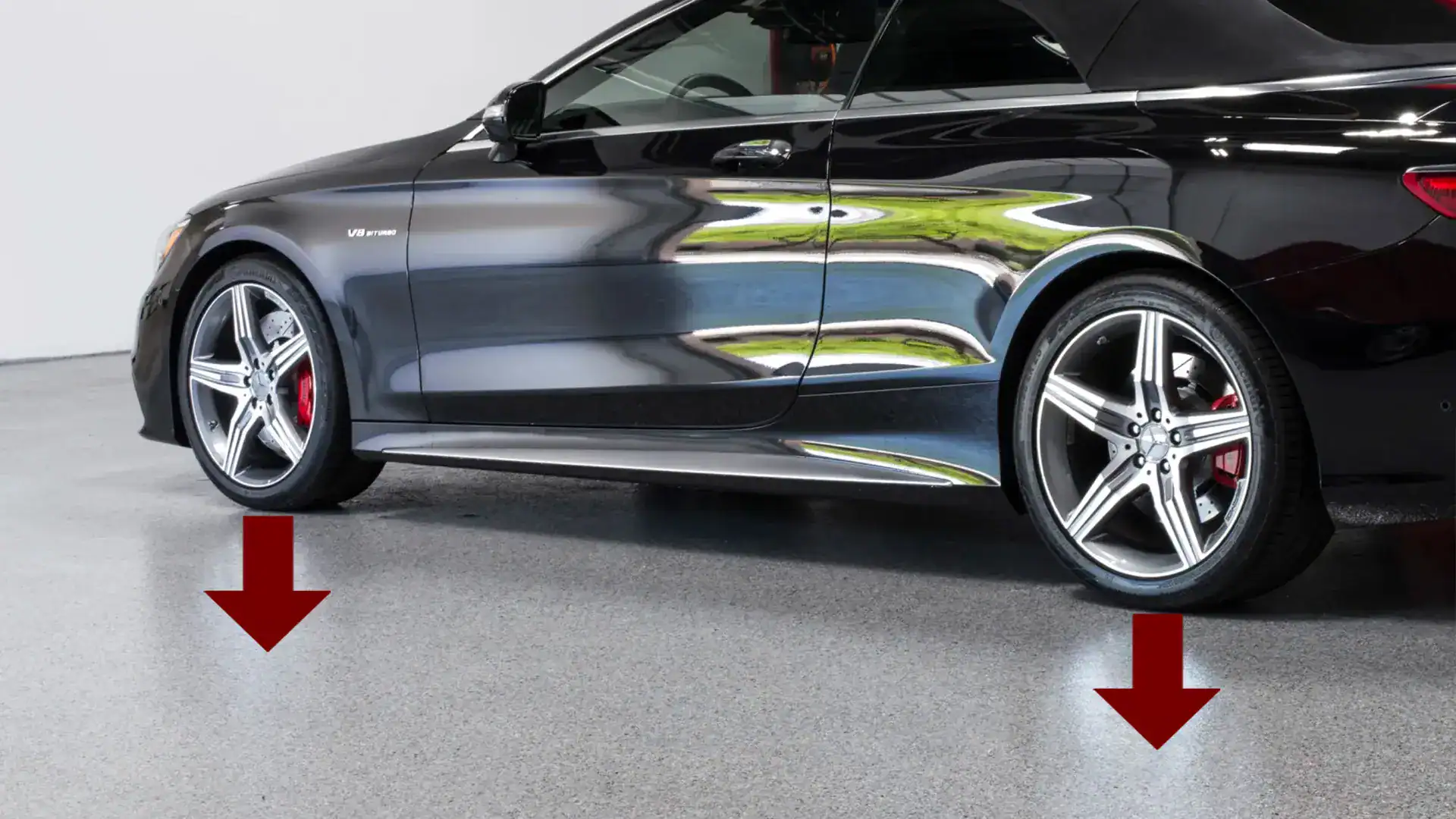
At Platinum Garage Flooring, Inc., our process is designed to eliminate those weak points. We install our hybrid epoxy and polyaspartic coating systems over two days because durability depends on quality coatings, properly layered.
Day one begins with mechanical grinding to open the concrete surface. Then , a high-build, moisture-mitigating, 100%-solids epoxy base coat is applied. While still wet, a full flake broadcast (of your chosen blend) is embedded into the base layer. The epoxy primer is are allowed to cure overnight to ensure deep concrete penetration and proper bonding.
On day two, we apply two separate (not just one!) 100%-solids, high cross-linking, clear polyaspartic topcoats. These dual layers form a dense, protective surface that resists heat, pressure, chemical exposure…and hot-tire transfer (which we fully warrant against).
Built for Heat, Humidity, and Daily Use
A high-quality polyaspartic floor coating creates a UV-stable, durable barrier that prevents hot tire pickup, resists staining, and holds up in demanding conditions. In Sarasota, where heat and humidity are constant factors, that protection makes a noticeable difference over time.
If your current floor shows tire marks or early wear, it may be time to upgrade to a garage floor coating system designed to last.
Contact Platinum Garage Flooring, Inc. today to learn more about polyaspartic floor coatings that stop hot tire transfer before it starts.